
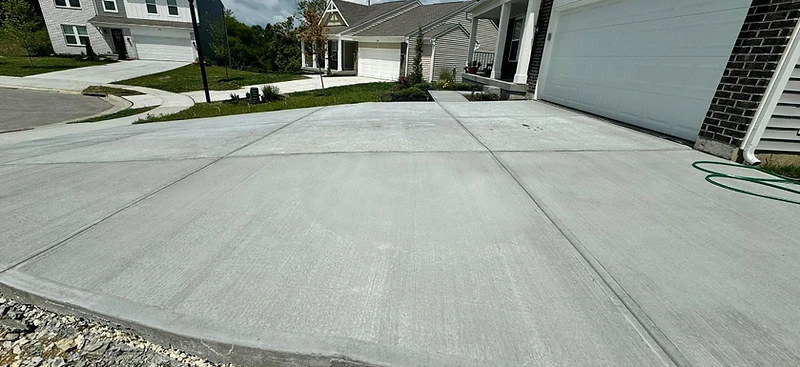
Concrete doesn't dry — it cures, a chemical reaction that needs time, moisture and cooperative temperatures. Spring in Indiana provides exactly one of those three reliably.
The general timeline
- 24–48 hours: foot traffic, carefully.
- About a week: vehicles on flatwork, typically.
- About a month: near full design strength.
Those shift with weather, mix and the job — which is why we put your job's specific cure guidance in writing rather than leaving it to a shouted reminder from the truck.
Why spring is tricky
Spring swings 40 degrees in a day here. Concrete curing in cold slows way down; a hard early-season frost on green concrete can damage the surface. Warm, windy spring days pull moisture out of the surface too fast, which weakens it. Managing that — timing, curing compound, protection — is part of the pour, and it's why we won't pour into a forecast that compromises your slab, even when the schedule wants us to. When a weather day moves your job, we tell you clearly and promptly.
What you can do during cure
Stay off it per the written timeline, keep vehicles off flatwork the full window, and go very easy on deicers the first winter — the surface is most vulnerable in its first freeze-thaw season.
The patience math
Your slab should last decades. The difference between "the crew left" and "you can park on it" is days. Don't spend decades of durability to save four days of parking on the street.