
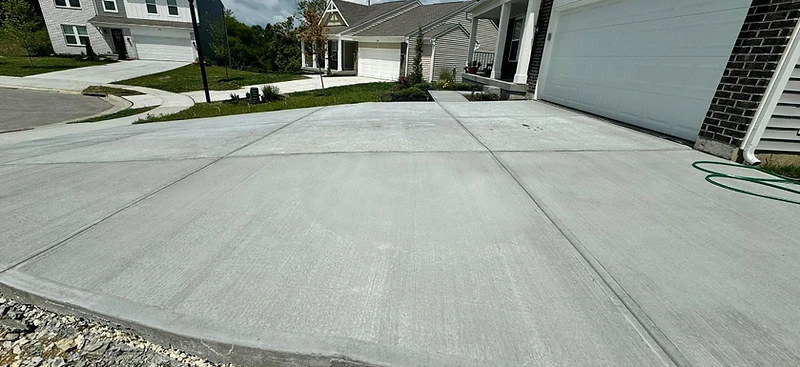
If you learn one thing from this site, make it this: it isn't the concrete, it's what's underneath. The same truck delivers the same mix to every job in the county. The difference between a slab that lasts and one that fails in three winters is the ground preparation you never see.
What Allen County clay does
Clay holds water. When it's wet, it swells; when it dries, it shrinks; when it freezes, the water in it expands and lifts whatever's on top. Northeast Indiana runs dozens of freeze-thaw cycles a winter. Concrete poured directly on clay — or on loose fill sitting on clay — gets jacked up and dropped over and over until it cracks.
What has to be different here
1. Excavate to undisturbed soil. Topsoil and old fill come out. Slabs sit on ground that has never been loosened, or on base built up from it.
2. A real stone base, in lifts. Stone drains and spreads load. But dumped stone is just a pile — it goes in layers, each compacted until it stops moving. "Compacted base" should mean a machine and passes, not a phrase on a quote.
3. Drainage planned first. Water that can't get away from your slab will get under it. Grade, slope and where the water goes are decided before the pour, not discovered after.
4. Frost depth respected on structural work. Footers for porches and additions go below the frost line, where the ground never freezes and never moves. Inspectors check this for a reason.
5. Joints cut for the slab you actually poured. Control joints spaced to the slab's dimensions give cracking a planned place to happen.
How to use this when you're comparing bids
Ask each bidder: how deep do you excavate, what base material and depth, how do you compact it, and is that itemized on the quote? A contractor who prices the base as its own line is showing you the part of the job that decides everything. One who buries it in a square-foot number is asking you not to look.