
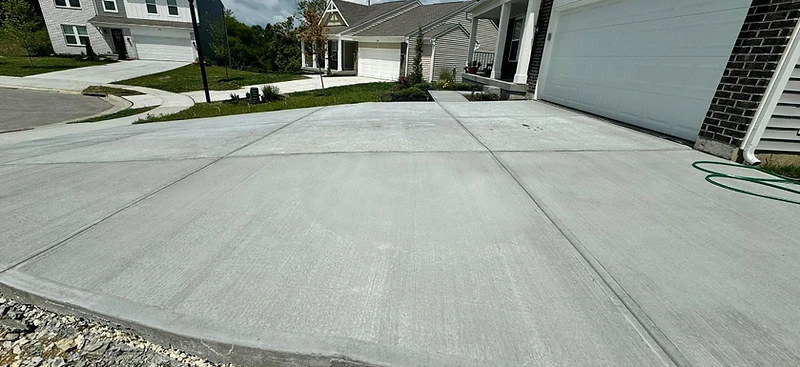
Walk your neighborhood and count the offset sidewalk joints — one slab an inch above the next, waiting for a toe. Every one of them is the same failure: freeze-thaw working on a walk poured over ground that holds water.
Why walks heave more than driveways
Sidewalks are thin, light and long — the easiest thing in the yard for frost to lift. And because they're cheap per square foot, they get the least base prep of anything poured. Minimal excavation, little or no stone, no compaction: it's the standard spec for failure.
The fix is boring and absolute
Excavate through the topsoil to soil that holds still. Put stone under the walk — enough to drain and spread load — and compact it in passes. Pour at proper thickness with joints spaced for the walk's width. That's it. There's no premium product or secret additive; there's just doing the invisible part or skipping it.
Drainage is half of it
A walk that dams water against its own edge keeps its base saturated, and saturated base is what freezes and lifts. Walk layout should follow the yard's drainage: water crosses the walk and keeps going, away from the house.
Fix or replace?
Grinding a trip edge or mudjacking a sunk panel can buy time when the base has mostly settled out. But if joints keep moving every winter, the ground is telling you the base was never right — and replacement with real prep is the only version that ends the cycle. We'll give you the straight answer on the walk-through.